Essential Components Required for a Reliable Rooftop Solar System
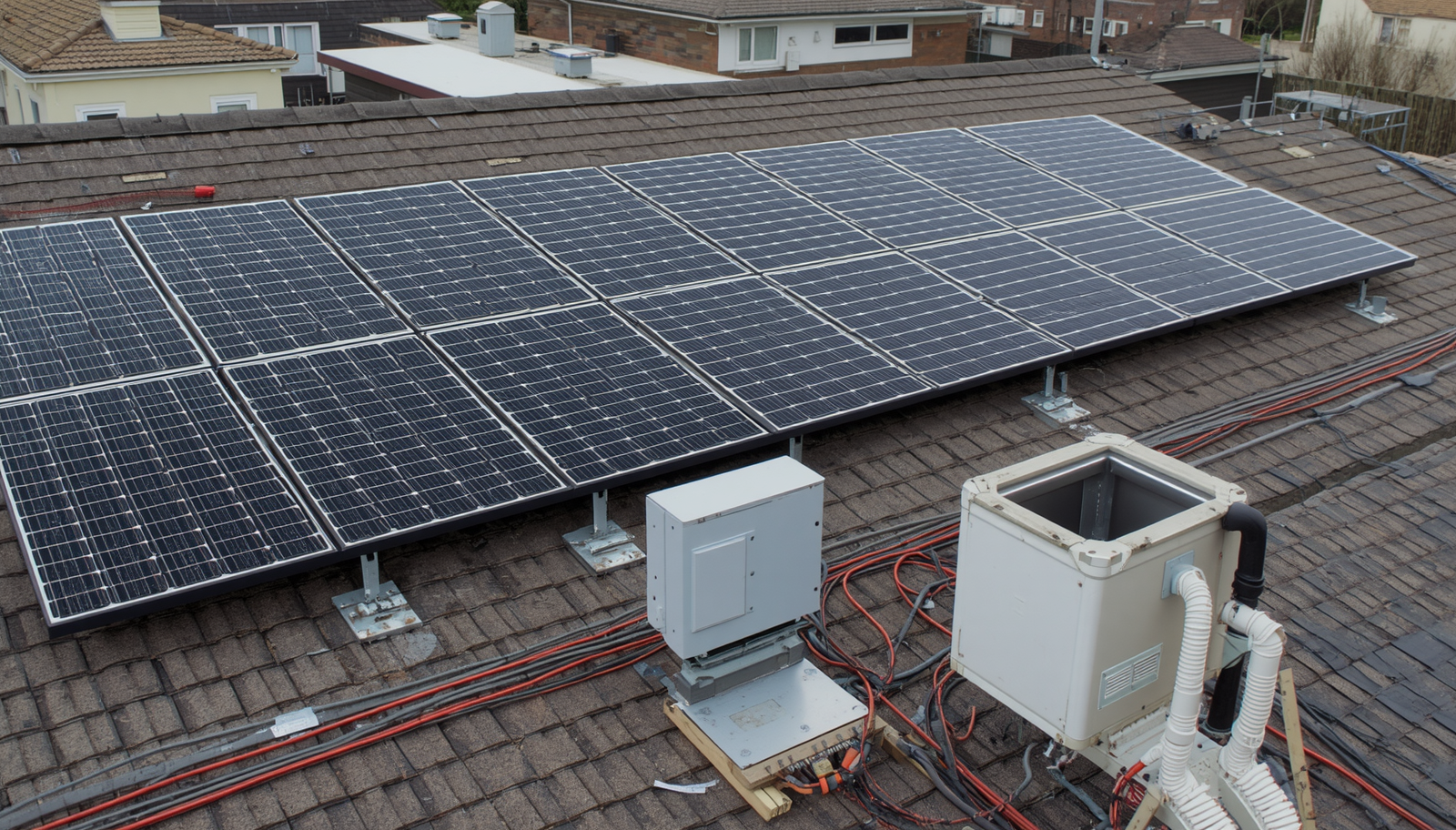
India's rooftop solar revolution is not just about panels on a roof — it is about assembling an ecosystem of precision-engineered components that collectively determine whether a system performs brilliantly for 25 years or disappoints within five. For dealers, distributors, and suppliers building credible solar portfolios, understanding what goes inside a reliable rooftop system is not optional — it is the foundation of every technically sound sales pitch and every warranty-free after-sales experience. As a leading bifacial solar cells manufacturer in India and a trusted bifacial solar modules manufacturer in India, Websol Energy System Ltd brings a manufacturer's-eye view to this conversation — revealing exactly which components separate high-performance rooftop installations from mediocre ones, and why sourcing decisions at every layer of the stack matter profoundly.
The Solar Cell: Where Energy Conversion Actually Begins
Every rooftop solar system traces its performance back to a single, irreducible origin point — the solar cell. It is the semiconductor device that converts photons into electrons, and its conversion efficiency determines the ceiling of everything that follows. Websol Energy System Ltd manufactures bifacial solar cells using advanced PERC architecture that push front-side efficiencies above 22%, while passivated rear surfaces ensure that albedo-reflected light is harvested with minimal resistive loss. For dealers serving discerning buyers — whether residential consumers comparing payback periods or industrial energy managers benchmarking levelised cost — cell-level efficiency is the specification that anchors the entire technical narrative.
Solar Modules: The Structural and Optical Packaging of Performance
A solar cell's efficiency is only realised when it is correctly encapsulated inside a module engineered to protect, connect, and optically optimise it over decades of outdoor exposure. As a solar module manufacturer in India, Websol Energy System Ltd applies dual-glass or transparent back-sheet configurations, low-iron tempered glass faces, UV-stable encapsulants, and precision laser-cut interconnection ribbons to ensure that cell-to-module efficiency loss — a chronic quality gap in commodity manufacturing — is kept to an absolute minimum. The company's bifacial modules are built to IEC 61215 and IEC 61730 standards, giving distributors a bankable product that passes due diligence from banks, insurance underwriters, and institutional procurement teams alike.
Mounting Structures: The Silent Determinant of Long-Term Yield
A panel mounted incorrectly is a panel underperforming silently. Rooftop mounting structures must accomplish three simultaneous objectives: optimise tilt angle for maximum annual irradiance capture, ensure adequate rear-side clearance for bifacial albedo gain, and withstand wind, seismic, and thermal stress across a 25-year service life. Websol Energy System Ltd advises its channel partners on structure selection criteria aligned to specific roof typologies — RCC flat roofs, metal sheet industrial sheds, and inclined residential tiles — because the wrong structure on the right module still produces a suboptimal system. Hot-dip galvanised or anodised aluminium rail systems with certified load ratings are non-negotiable, particularly for installations in coastal or high-wind zones.
String Inverters and Microinverters: Converting DC to Bankable AC
The inverter is the brain and the bottleneck of any rooftop system. It converts the direct current generated by the solar array into the alternating current that feeds the building's electrical loads and the utility grid. For residential rooftops where partial shading from parapets, water tanks, or adjacent structures is common, Websol Energy System Ltd recommends evaluating microinverter or power optimiser configurations that allow module-level maximum power point tracking — eliminating the cascade yield loss that a single shaded cell imposes on an entire string in a conventional central inverter setup. For large industrial rooftops with unobstructed, homogeneous arrays, high-efficiency string inverters with dual or multi-MPPT inputs remain the optimal balance of cost and performance.
Solar Cells: The Bifacial Difference That Compounds Over Time
The transition from monofacial to bifacial cell architecture is not a luxury upgrade — it is a long-term yield decision with compounding financial consequences. As a dedicated solar cell manufacturer in India, Websol Energy System Ltd produces bifacial cells that harvest energy from both the illuminated front surface and the reflective rear surface simultaneously. On a white-terrace residential rooftop with 25% albedo, this rear-side contribution can add 12–18% to annual generation at zero additional inverter or balance-of-system cost. For industrial installations on reflective metal roofs or elevated agrivoltaic structures, rear-side gains can reach 25–30%. For dealers building total cost of ownership models for buyers, this yield uplift is a quantifiable, defensible number that supports bifacial premium pricing without apology.
DC Cables, Connectors, and Junction Boxes: The Unglamorous Infrastructure That Cannot Fail
Experienced solar installers know that most system failures over a 25-year lifetime do not originate in the panel or the inverter — they originate in the balance-of-system components that receive the least attention during specification. UV-stabilised, double-insulated DC cables rated for 1500V systems, weather-sealed MC4 connectors with contact resistance below 0.5 milliohms, and IP68-rated junction boxes with bypass diodes that protect against hot-spot formation are the unglamorous infrastructure on which system reliability ultimately rests. Websol Energy System Ltd consistently emphasises to its dealer and distributor network that specifying certified BOS components from the outset is far less expensive than diagnosing and replacing failed connectors on a commissioned rooftop system five years into service.
Battery Storage Integration: Shifting Solar from Generation to Energy Management
India's net-metering policy landscape is evolving, and in several states the economics of solar-plus-storage are beginning to challenge pure grid-export models — particularly for residential consumers facing time-of-use tariff structures and for industrial buyers managing peak demand charges. Websol Energy System Ltd supports channel partners in evaluating AC-coupled and DC-coupled battery integration architectures compatible with its bifacial module output characteristics. Lithium iron phosphate (LFP) battery systems with compatible battery management systems (BMS) allow rooftop systems to shift midday generation surplus to evening consumption peaks — dramatically improving self-consumption ratios and reducing grid dependence without compromising system safety or BIS compliance.
Monitoring Systems: The Data Layer That Protects Dealer Reputation
A rooftop solar system without monitoring is a system whose underperformance may go undetected for months. String-level or module-level monitoring platforms that log irradiance, temperature, voltage, current, and yield data at 15-minute intervals give installers and system owners the diagnostic visibility to distinguish soiling losses from equipment faults before either escalates into a warranty dispute. Websol Energy System Ltd integrates monitoring compatibility into its module and system design recommendations, ensuring that dealers who commission systems with proper monitoring infrastructure are protected from performance liability claims driven by soiling, shade growth, or inverter drift — factors entirely outside the module's control.
PM Surya Ghar Compliance: Designing Systems That Qualify for Subsidy Disbursement
India's PM Surya Ghar Muft Bijli Yojana has created an unprecedented demand surge for residential rooftop solar — but subsidy disbursement is contingent on technical compliance across every system component. Panel selection, system sizing, wiring standards, and net-meter compatibility must all conform to DISCOM-specific technical requirements. For dealers and installers navigating this compliance landscape, Websol Energy System Ltd has developed a detailed guide on Rooftop Solar System Design for PM Surya Ghar Installers that covers panel selection criteria, capacity sizing methodology, and documentation checklists aligned to scheme guidelines — giving channel partners a practical compliance framework rather than a bureaucratic maze.
The Websol Advantage: A Vertically Integrated Component Ecosystem
Most solar component suppliers are aggregators — assembling products from multiple manufacturers with varying quality standards and no unified performance accountability. Websol Energy System Ltd is architecturally different: as a vertically integrated bifacial solar modules manufacturer in India with in-house cell manufacturing, the company controls quality from semiconductor substrate to finished module. This vertical integration eliminates the quality discontinuities that arise when cell efficiency data from one supplier is paired with module lamination tolerances from another. For distributors managing large project pipelines where system performance guarantees are commercially binding, sourcing from Websol means a single technical accountability chain — from the cell that converts the photon to the module that delivers the watt.
Building Your Rooftop Solar Portfolio Around the Right Manufacturer
The components inside a rooftop solar system are only as reliable as the ecosystem of manufacturers and partners that stand behind them. Websol Energy System Ltd offers dealers, distributors, and suppliers across India not just a product catalogue but a partnership infrastructure — encompassing technical training, project design support, co-marketing collateral, ALMM-listed product eligibility, and pan-India logistics coordination. As India accelerates toward its renewable energy targets, the dealers who build long-term sourcing relationships with a certified bifacial solar cells manufacturer in India of Websol's depth and capability will be the ones who consistently win the best projects, retain the best installers, and build the most defensible positions in one of the world's fastest-growing solar markets.
